
The short answer: most modern shower hoses share a common connector standard — but “universal” is an oversimplification. Regional thread standards, nominal vs. actual dimensions, and brand-specific fittings all affect real-world compatibility. This guide covers every dimension, standard reference, and installation nuance so you buy the right hose the first time.
Key Takeaways
- Most shower hoses are 1/2 inch (approximately 1.3 cm) in size. This size is compatible with many shower heads. You should check the size before purchasing a new hose. This helps ensure the hose can be installed correctly.
- The G1/2 connector is the most common type of connector for shower hoses. This connector facilitates hose installation or replacement. Some brands, such as GONGGONG, manufacture hoses compatible with this connector.
- If your shower head uses a different connector, you may need an adapter or special fittings. You should measure the size of your old hose or consult a plumber. This will help you find the right hose.
The Global Thread Standards Behind Shower Hoses
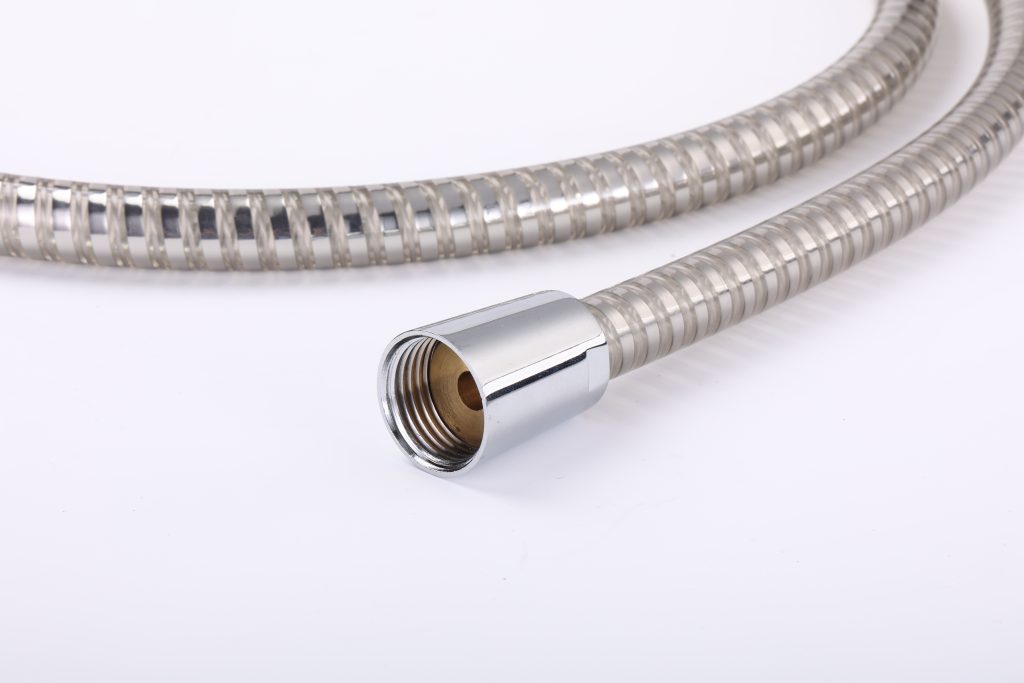
Shower hose compatibility is not about the hose body — it is about the threaded connector at each end. Three major standards govern these threads, and they are not interchangeable without adapters.
G1/2 — BSPP (British Standard Pipe Parallel)
The most widely adopted standard worldwide, governed by ISO 228-1:2000 and BS EN 1113. The “G” designation indicates a parallel (straight) thread that seals via a flat washer or O-ring at the face — not by thread interference.
| Parameter | Value |
|---|---|
| Standard | ISO 228-1 / BS EN 1113 |
| Designation | G1/2 (BSPP 1/2″) |
| Nominal bore | 1/2 inch (DN 15) |
| Major diameter | 20.955 mm (0.825″) |
| Thread pitch | 1.814 mm (14 TPI) |
| Thread angle | 55° |
| Thread profile | Parallel (straight) |
| Sealing method | Face seal (washer / O-ring) |
Key Distinction: BSPP (G) is parallel-threaded and relies on a face-sealing washer. Do not confuse it with BSPT (British Standard Pipe Tapered, ISO 7-1), which has a 1:16 taper and seals by thread interference. Shower hoses almost exclusively use the parallel G (BSPP) form.
1/2″ NPT — National Pipe Tapered
The dominant standard in the United States and Canada, governed by ASME B1.20.1. NPT threads are tapered (1:16) and seal by thread deformation/interference, often with PTFE tape or pipe dope.
| Parameter | Value |
|---|---|
| Standard | ASME B1.20.1 |
| Designation | 1/2″ NPT |
| Nominal bore | 1/2 inch (DN 15) |
| Major diameter (gauge plane) | 21.336 mm (0.840″) |
| Thread pitch | 1.814 mm (14 TPI) |
| Thread angle | 60° |
| Thread profile | Tapered (1:16) |
| Sealing method | Thread interference + sealant |
NPS — National Pipe Straight
Sometimes referenced in plumbing contexts, NPS (ASME B1.20.1) uses the same thread form as NPT but without the taper. It is not commonly found on shower hoses. When you encounter a straight pipe thread in North American fixtures, verify whether it is actually NPS or a parallel G-thread. The 60° thread angle of NPS/NPT versus the 55° angle of G/BSPP is a reliable discriminator with a thread gauge.
Quick Reference: Thread Standards at a Glance
| Attribute | G1/2 (BSPP) | 1/2″ NPT | 1/2″ NPS |
|---|---|---|---|
| Standard | ISO 228-1 | ASME B1.20.1 | ASME B1.20.1 |
| Profile | Parallel | Tapered (1:16) | Parallel |
| Thread angle | 55° | 60° | 60° |
| Pitch | 1.814 mm (14 TPI) | 1.814 mm (14 TPI) | 1.814 mm (14 TPI) |
| Nominal OD | 20.955 mm | 21.336 mm | 21.336 mm |
| Seal | Face (washer/O-ring) | Thread interference | Face (gasket) |
| Primary regions | UK, EU, AU, Asia | US, Canada | Rare (specialty) |
| Interchangeable? | Not directly — requires adapter | ||
Common Pitfall: A G1/2 fitting and a 1/2″ NPT fitting share a very close major diameter (≈21 mm) and identical pitch (14 TPI), making them visually similar — but the 55° vs. 60° thread angle difference means they will cross-thread and leak if forced together. When in doubt, use a thread pitch gauge.
Shower Hose Compatibility
Regional and Brand Variations
Shower hose compatibility depends on where you live and the brand you pick. Different places use different thread types for shower hoses. The table below shows the main differences:
| Region | Primary Standard | Notes |
|---|---|---|
| United Kingdom | G1/2 (BSPP, ISO 228-1) | Mandated under BS EN 1113 for shower hose connectors |
| European Union | G1/2 (BSPP, ISO 228-1) | Harmonized across member states; virtually all residential showers use this |
| United States & Canada | 1/2″ NPT (ASME B1.20.1) | Some imported fixtures may use G1/2; always verify |
| Australia & New Zealand | G1/2 (BSPP) | Follows British plumbing heritage; AS/NZS 3500 references BSP threads |
| China & Southeast Asia | G1/2 (BSPP) dominant | Export-oriented manufacturers often produce both G and NPT variants |
| Japan | G1/2 (BSPP) common | Some domestic brands use JIS parallel threads compatible with G1/2 |
Some brands use special connectors that are not standard sizes. These special connectors can make it difficult to find a suitable shower hose. For example:
- Aslon Industries Ltd. manufactures anti-twist shower hoses that use special connectors.
- Some shower systems, such as rain showers or dual-system showers, may use custom connectors.
Older shower systems or models from other countries may use different connectors. Always check the connector type before purchasing a new hose.
How to Accurately Identify Your Shower Hose Thread
Guessing by eye is the most common cause of returns and leaks. A proper measurement takes under two minutes and eliminates uncertainty.
What You Need
- Caliper (digital or vernier) — for measuring major diameter to ±0.1 mm
- Thread pitch gauge (Whitworth 55° and Metric/Unified 60° combs) — to confirm pitch and angle
- Alternatively: a ruler marked in mm and a known-good reference thread for comparison
Step-by-Step Measurement
- Measure the major (outer) diameter. Place the caliper jaws across the outermost peaks of the male thread.
Expected: ≈20.96 mm (0.825″) for G1/2; ≈21.34 mm (0.840″) for 1/2″ NPT. A reading near 26.4 mm suggests a 3/4″ connection. - Measure the pitch. Align the pitch gauge leaves against the thread. Both G1/2 and 1/2″ NPT share 14 TPI (1.814 mm pitch), so pitch alone is not enough.
- Determine the thread angle. The pitch gauge confirms the profile angle: 55° for G/BSPP, 60° for NPT/NPS. This is the definitive discriminator.
- Check for taper. Run the caliper along the thread length. A constant diameter = parallel (G or NPS). A decreasing diameter = tapered (NPT or BSPT).
- Inspect the sealing surface. Flat face with rubber washer recess = G-type. Bare metal thread with no washer = likely NPT.
Practical Shortcut: If you lack measurement tools, unscrew the old hose and bring it to a plumbing supply store. Alternatively, take a close-up photo of the connector next to a ruler for online shopping reference.
Adapters & Non-Standard Connection Solutions
When your wall outlet or shower head fitting does not match the hose connector, an adapter bridges the gap — provided you have correctly identified both thread standards involved.
Common Adapter Types
| Adapter Type | Function | Typical Use Case |
|---|---|---|
| NPT-to-BSPP converter | Converts tapered NPT to parallel BSPP | Using a European hose on a US wall outlet, or vice versa |
| Thread reducer bushing | Reduces 3/4″ to 1/2″ | Connecting a standard G1/2 hose to a high-flow 3/4″ outlet |
| Swivel / rotary adapter | Adds 360° rotation between hose and head | Preventing hose kinking in tight shower enclosures |
| Quick-connect adapter | Push-to-connect, pull-to-release | Frequent hose removal for cleaning or multi-head setups |
| Flow limiter insert | Restricts flow rate (typically 6–9 L/min) | Compliance with water efficiency regulations |
Adapter Selection Checklist
- Confirm both thread standards (not just nominal size) on both sides of the connection.
- Check the inner diameter — a poorly matched adapter can restrict flow noticeably.
- Use PTFE tape on NPT and BSPT threads (never on G-type face-seal threads, where tape can prevent the washer from seating).
- Verify the adapter’s material: brass adapters (CW617N or equivalent) offer the best longevity.
Warning: Stacking multiple adapters adds leverage and potential leak points. Limit to one adapter per connection whenever possible.
Note: Picking a shower hose that fits the standard, like one from GONGGONG, makes installation easier and means you may not need extra adapters.
Shower Hose Replacement Options

Choosing the Right Replacement
Choosing the right shower hose can enhance your shower experience and extend its lifespan. A sturdy shower hose is flexible and not prone to breakage. The length of the hose determines its coverage area. Short hoses of around 1.25 meters are best suited for small showers. Most people use 1.5-meter hoses for everyday showers. Longer hoses of around 2 meters are suitable for larger showers or special purposes.
The material of the hose is also important. Stainless steel hoses will not rust and can withstand strong water flow. PVC hoses are lightweight and easy to clean. Chrome-plated plastic hoses look like metal but are lightweight. TPE or silicone hoses have good bending properties and are heat-resistant. The appearance of the hose should coordinate with other bathroom accessories and provide effective protection for the hose.
| Material | Durability | Flexibility | Corrosion Resistance | Best For |
|---|---|---|---|---|
| Stainless Steel (304/316) | Excellent | Good | Excellent | Long-term installations; hard-water areas |
| Chrome-Plated Brass | Very good | Moderate | Very good | Style-conscious bathrooms matching chrome fixtures |
| PVC / Plastic | Moderate | Excellent | Good (UV-sensitive) | Budget replacements; rental properties |
| TPE / Silicone | Good | Excellent | Excellent | Premium feel; heat resistance up to 100°C+ |
Tip: The right shower hose stops leaks and fits your shower well.
Installation Tips
Properly installing a new shower hose will ensure its proper function. You can follow these steps:
- Choose a hose that is the right length for your shower.
- Prepare tools: new hose, wrench, Teflon tape, and a cloth.
- Loosen both ends of the old hose and remove it.
- Wrap Teflon tape around the threads to prevent leaks.
- Screw the new hose onto the shower head and faucet. Do not overtighten.
- Turn on the faucet and check for leaks.
- Clean and inspect the hose regularly to extend its lifespan.
A high-quality shower hose makes every shower more comfortable and convenient.
Most shower hoses come in standard sizes, but some shower setups require special fittings. Checking the compatibility of your shower hose before purchasing can prevent leaks and other problems. It’s helpful to measure the size of an old hose or take it to the store for confirmation. To keep your hose in good working order, follow these tips:
- When installing the hose, ensure the sealing ring is installed correctly.
- Check for leaks after installation.
- Clean the hose regularly with a mild detergent.
- Avoid stretching the hose or hanging heavy objects on it.
- Store the hose by letting it hang naturally.
FAQ
Is there a truly universal shower hose size?
No. G1/2 (BSPP, ISO 228-1) covers the majority of residential showers worldwide, but North American installations using 1/2″ NPT (ASME B1.20.1) break the “universal” claim. Even within G1/2 systems, some brands use proprietary collar diameters or quick-connect fittings that restrict third-party compatibility.
Can I use a G1/2 hose on a 1/2″ NPT outlet?
Not directly. The 55° vs. 60° thread angle mismatch will cause cross-threading and leaks. Use a BSPP-to-NPT adapter — a small brass fitting that provides a correct thread interface on each side.
What is the difference between BSP, BSPP, and BSPT?
BSP is the umbrella designation. BSPP (parallel) = G-thread per ISO 228-1, used on shower hoses; seals with a washer. BSPT (tapered) = R-thread per ISO 7-1, used on pipe joints; seals by thread interference. They are not interchangeable.
Are 3/4-inch shower hoses common?
Rare in residential settings. The 3/4″ size (G3/4: ≈26.44 mm major diameter, 14 TPI) appears in high-flow commercial showers and older institutional plumbing. Source from a specialist plumbing supplier.
Does hose length affect water pressure?
For typical residential lengths (1.25–2.0 m), the pressure drop is negligible (under 2% at 9–12 L/min). Pressure loss becomes measurable only beyond 5 meters or with narrow-bore (<8 mm ID) hoses.