
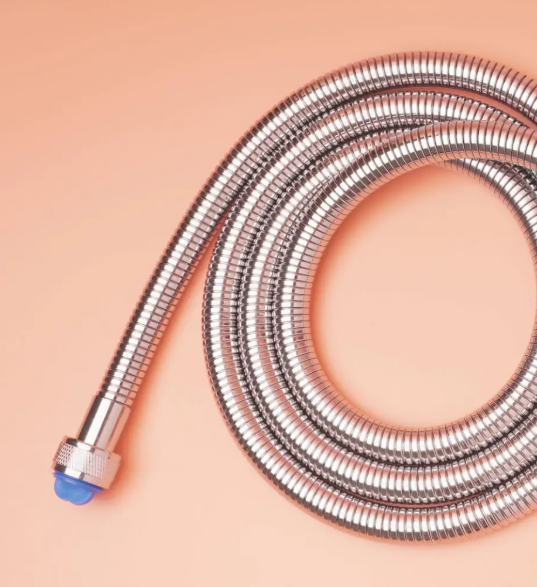
The short answer is yes. A longer shower hose will deliver slightly lower water pressure at your shower‑head, caused by higher friction loss inside the tube. Many homeowners notice weaker water flow right after switching to an extended‑length hose, simply because they did not pick a suitable hose size for their bathroom setup. Friction loss is the root cause behind this pressure drop. The actual change in flow also depends on hose inner diameter, tube material and your incoming water pressure. This article breaks down how pressure drops happen, why hose width matters far more than length, and how you can select a shower hose length that works well with your home plumbing.
Key Takeaways
- Longer shower hoses lower water pressure due to friction, but the drop is small for most homes.
- Hose diameter matters more than length; a wider hose keeps water flow strong.
- Choose the shortest hose that reaches comfortably and upgrade to a wider hose if flow weakens.
How Shower Hose Length Causes Friction Loss

Think about sipping a thick milkshake through a very long straw. The longer your straw is, the harder you need to suck. Water moving through a shower hose follows exactly the same rule. Every extra section of hose adds flow resistance, which consumes part of the water’s moving energy. This energy waste is known as friction loss in hydraulic engineering.
Understanding Friction in Water Flow
Friction loss occurs when running water rubs against the inner wall of your shower hose. Part of the water’s kinetic energy turns into heat, and pressure drops as water travels onward. The Darcy‑Weisbach equation gives an accurate mathematical description of this hydraulic behaviour.
| Variable | Description | Unit |
|---|---|---|
| h_f | Frictional head loss | m |
| f | Darcy friction factor (dimensionless) | – |
| L | Pipe length | m |
| D | Pipe inner diameter | m |
| V | Average flow velocity | m/s |
| g | Gravitational acceleration | m/s² |
Head loss rises proportionally with pipe length. It increases with the square of flow velocity, and decreases significantly as inner diameter gets larger.
The Reynolds number tells engineers whether water flows in smooth laminar flow or turbulent flow. Turbulent flow generates far higher friction loss. The Moody diagram plots Darcy‑Weisbach friction factor against Reynolds number and wall relative roughness. It clearly marks laminar, transition and turbulent flow zones. Reference pressure‑loss values:
- Re = 5,000, steady pressure loss: 0.007 kPa
- Re = 100,000, steady pressure loss: 1.09 kPa
- Re = 1,000,000, steady pressure loss: 65.1 kPa
- Re = 10,000,000, steady pressure loss: 6.11 × 10³ kPa These figures show how sharply friction rises once water flow becomes highly turbulent.
Key Factors: Length, Diameter, and Material
Three main factors control friction loss in shower hoses: length, inner diameter and tube material. Length adds resistance in a linear way. A 6‑foot hose produces roughly double the friction loss of a 3‑foot hose. Even so, pure length‑related pressure loss is usually small under typical residential plumbing conditions. What homeowners notice most often is reduced flow rate, not a dramatic pressure drop. Extended‑length hoses tend to cut outlet flow, and this effect becomes very obvious in homes with low incoming water pressure.
Inner diameter outweighs length when it comes to flow performance. As the Darcy‑Weisbach formula shows, diameter sits in the denominator. Doubling your hose inner diameter greatly cuts friction loss. Under identical conditions, a 1/2‑inch hose delivers far better flow than a 3/8‑inch hose. Wider bore helps preserve water pressure and improves overall throughput for your shower system.
Material determines how much drag water meets inside the hose, depending on inner‑wall smoothness.
| Material | Impact on Friction Loss |
|---|---|
| Stainless steel hose | Smooth inner surface reduces friction loss; resists scale buildup |
| PVC hose | May get internal blockages from scale, raising friction loss over time |
| Rubber hose | Rougher inner surface increases friction, lowering flow |
GONGGONG supplies braided shower hoses fitted with smooth inner liners. Their stainless‑steel options resist limescale effectively, while polymer‑lined hoses offer flexible performance at a competitive price. Buyers can request custom‑made lengths and diameters. Wholesale orders allow installers to match hose specifications to each property’s water‑supply situation. Well‑built shower hoses from trusted manufacturers maintain consistent water flow for years.
When selecting a hose, balance your desired reach against flow performance. Shorter hoses lose less flow to friction. If you need extra length, pick a wider‑bore hose to offset added friction. Always check your home’s baseline water pressure before purchasing to avoid disappointing weak‑flow results after installation.
The Real Impact of a Shower Hose on Water Pressure and Flow
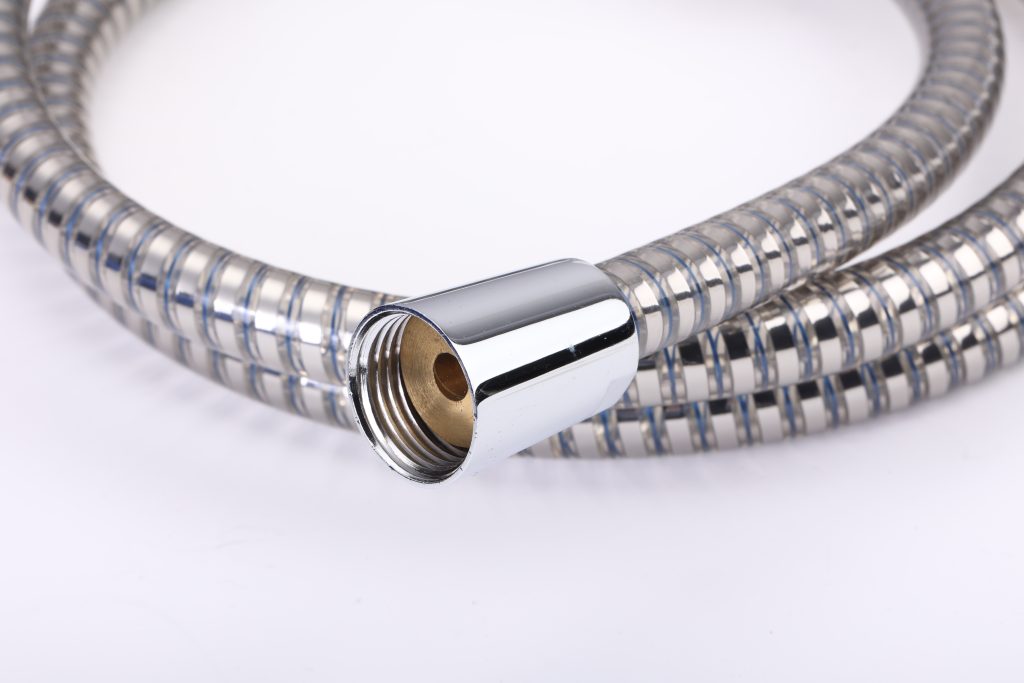
How Much Pressure Is Lost per Foot?
Every additional foot of hose adds flow resistance, which reduces the water pressure arriving at your shower‑head. Under normal residential water‑supply conditions, pressure loss per foot remains fairly small. A 10‑foot hose usually causes only a minor pressure drop compared with a 5‑foot version.
Still, low‑pressure households will feel this change much more strongly. Plumbing systems already struggling with weak flow suffer noticeably from added hose resistance. In homes with strong municipal water supply, the pressure gap between a 3‑foot and 6‑foot hose is normally just a few percent of total pressure. In older buildings or homes fitted with narrow supply pipes, however, that same small pressure loss can turn a strong shower into a trickle.
Your water source largely decides how sensitive you are to hose‑length changes. Homes connected to stable high‑pressure city water usually notice almost no difference after fitting a longer hose. Properties running on well pumps or gravity‑fed water systems will spot weaker flow immediately.
Why Diameter Matters More Than Length
In fluid dynamics, water flow rate is directly tied to the cross‑sectional area of your hose. With fixed inlet pressure, a wider tube lets far more water pass through. The table below illustrates this relationship clearly.
| Hose Diameter | Radius (inches) | Cross-sectional Area (sq in) | Relative Flow Rate (at same pressure) |
|---|---|---|---|
| 1/2 inch | 0.25 | 0.196 | 1x (baseline) |
| 3/4 inch | 0.375 | 0.442 | 2.25x |
These calculations show upgrading from a 1/2‑inch hose to a 3/4‑inch hose increases theoretical flow capacity by 2.25 times. This improvement easily outweighs the small pressure penalty from adding several feet of hose length. GONGGONG’s 1/2‑inch braided hoses maintain solid flow performance even in longer sizes, as the wider bore compensates for friction loss.
The flow boost you get from a wider hose also depends on your incoming water pressure. Households with good water pressure see dramatic improvements, while low‑pressure homes often cannot take full advantage of a larger‑diameter hose. In these cases you will need to improve your water supply before you can unlock the theoretical flow benefits.
Always assess your home water‑supply performance before finalising hose diameter. GONGGONG offers custom‑length hoses, letting contractors tailor each installation to local plumbing conditions. Wholesale clients can specify both diameter and length to achieve steady, reliable shower flow. Very often, a moderately‑long wide‑bore hose out‑performs a shorter narrow hose. Understanding how length and diameter interact helps buyers strike the perfect balance between reach, comfort and powerful shower flow.
To sum up: longer shower hoses increase friction loss and reduce outlet pressure, yet diameter has a far‑larger effect on flow than length. Wider‑bore hoses compensate for pressure drop caused by extra length. Homeowners can test their baseline water pressure, select the shortest suitable hose, and upgrade to a larger bore if flow feels weak. GONGGONG provides custom‑spec hoses for stable water‑flow performance.
FAQ
Does a longer shower hose always lower water pressure?
Yes, friction loss increases with length. However, the drop remains small. The home water supply capacity and hose diameter affect the result more than the added length.
Does a wider diameter help maintain good flow in a long shower hose?
Yes, a wider hose reduces friction loss significantly. A 1/2 inch model compensates for extra length. The flow rate improves more than upgrading to a shorter narrow hose.
What is the best length for a shower hose?
Use the shortest length that reaches comfortably. Extra length adds friction without benefit. Check the home water supply capacity before choosing the length.