
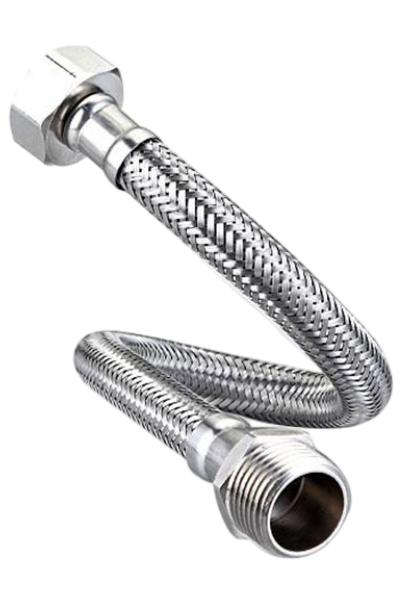
Stainless steel braided hoses — including flexible shower hose and kitchen hose — consist of two main components: an inner hose for fluid conveyance and an outer stainless steel wire braid that adds strength and pressure resistance. This design allows the hose to bend without kinking while withstanding high pressure. The manufacturing process involves forming the inner hose, applying the stainless steel braid layer, and installing the fittings.
Key Takeaways
- Stainless steel braided hoses primarily consist of two layers: an inner layer for fluid conveyance and an outer braided steel wire layer that enhances strength and prevents kinking.
- Please select the appropriate inner hose core based on the fluid being conveyed and choose a matching braid density according to pressure requirements; a double-braid structure can withstand higher pressures.
- Be sure to purchase certified stainless steel braided hoses. Certified hoses have undergone pressure testing, feature secure and reliable connections, and offer a long service life.
Understanding Stainless Steel Braided Hose Construction
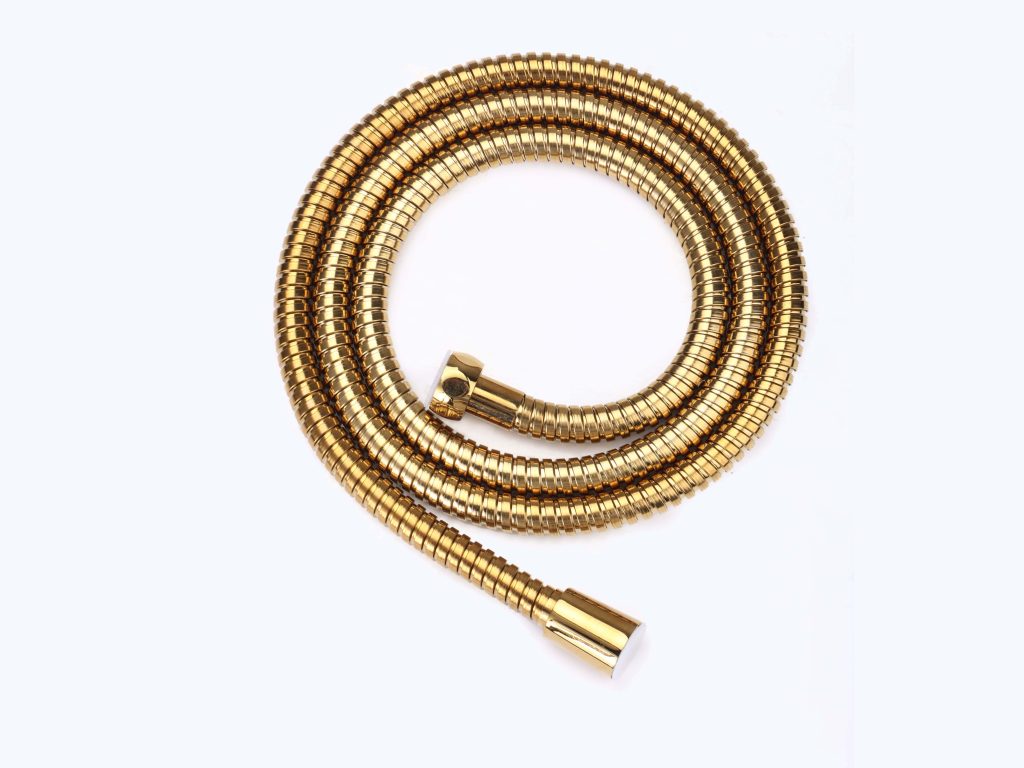
Stainless steel braided hoses consist of two main components: an inner hose for fluid conveyance and an outer stainless steel wire braid that adds strength and pressure resistance. This design allows the hose to bend without kinking while withstanding high pressure.
Inner Core Materials
The inner layer is selected based on the application. Common materials include EPDM rubber, cross-linked polyethylene (PEX), standard rubber, PTFE, and corrugated stainless steel.
- EPDM and PEX: hot and cold water
- Rubber or PTFE: chemicals and high-purity fluids
- Corrugated stainless steel: extremely high temperatures and pressures
Burst pressure varies by core material. A rubber-braided hose may have a burst pressure of 6.2 MPa. A corrugated stainless steel braided hose with EPDM gaskets may have a working pressure of 200 psi and a burst pressure of 1,850 psi. These ratings help engineers select the right hose for each system.
Structure and Design of Stainless Steel Braided Hoses
The key element is the braid layer. A braiding machine weaves stainless steel wire around the inner hose, creating an outer reinforcement layer. This layer prevents the inner hose from expanding under pressure and protects against abrasion and corrosion.
Braid coverage directly affects performance. A high-coverage braid offers better structural stability and longer cycle life. If pressure capacity is limited by the braid, it can be increased by using thicker wire, double-layer braiding, or multi-layer braiding. However, if the limit comes from the corrugated hose’s hoop burst strength, adding more braid layers will not improve pressure resistance.
Wire material also matters. Hoses braided with 304 stainless steel offer good corrosion resistance. Those using 316 stainless steel provide superior corrosion resistance, especially in chloride-rich environments. Double-layer stainless steel braided hoses withstand higher pressures and help prevent bursting or leakage.
How Stainless Steel Braided Hoses Are Made
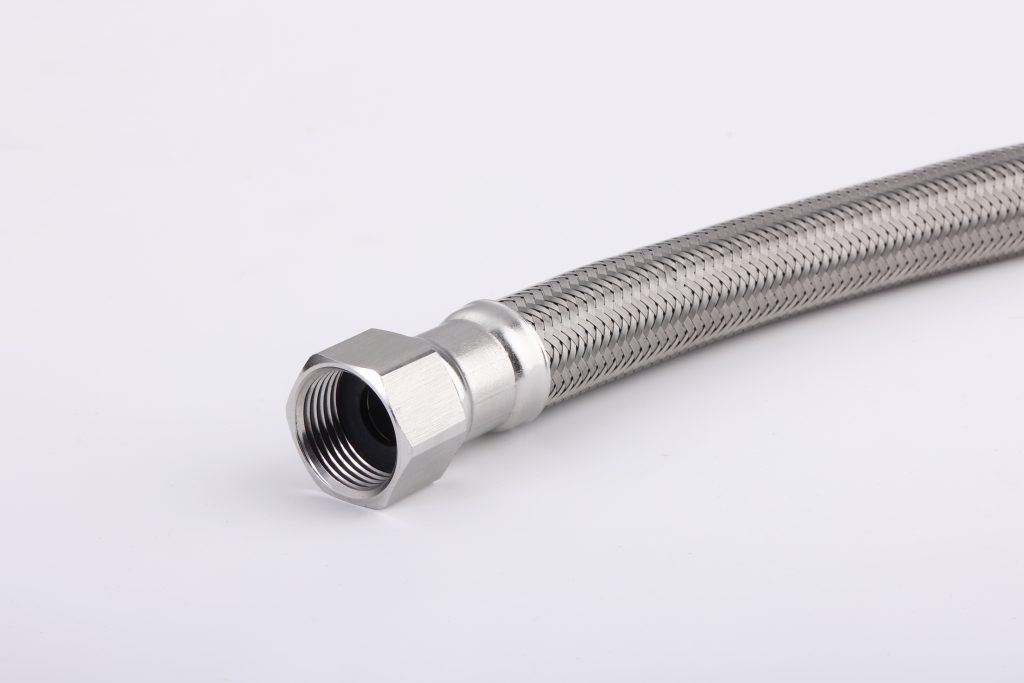
Making the Inner Tube
Manufacturers extrude the inner tube to the required diameter and length, establishing the flow path. For metal-core hoses, thin-walled 300-series stainless steel sheet is rolled and butt-welded into a tube, then corrugated by hydraulic or mechanical forming. The result is a corrugated hose with annular or parallel corrugations. Tight-pitch designs offer the greatest flexibility and allow bending in confined spaces.
Applying the Stainless Steel Braid
The hose is fed into a braiding machine, which weaves stainless steel wire into a dense mesh around the inner tube. Common configurations include single-layer and double-layer braids. Braiding density affects pressure ratings: a denser mesh supports higher working pressure. Double-braided hoses can withstand higher pressures than single-braided ones. The outer mesh also provides abrasion and corrosion resistance.
Manufacturers like GONGGONG offer stainless steel braided hoses in custom lengths and diameters. Custom sizing helps prevent kinking and ensures smooth flow. GONGGONG supplies wholesale products to plumbing, construction, and industrial clients. Their hoses balance flexibility with strength and meet rigorous quality standards.
How a Stainless Steel Braided Hose Is Put Together and Checked
Attaching Fittings
After braiding, fittings are attached to both ends. The most common method uses a crimping tool to press a metal collar around the fitting, securing it and creating a permanent seal. This method suits most household applications, such as faucet supply hoses. Another method is welding, where a collar is welded onto the end fitting. Welded hoses are used in industrial piping and high-pressure systems. The fitting size must match the hose diameter and thread specifications.
Quality Checks and Standards
Quality control begins before assembly. GONGGONG conducts 100% inspection of all raw materials, checking the inner tube, stainless steel wire, and braided layer for gaps.
After assembly, every hose undergoes pressure testing. Testers fill the hose with water and raise pressure beyond its working limit while monitoring for leaks. Leak testing focuses on fittings, since connection points are often the weakest links. High-quality hoses remain tight and flexible under pressure.
Certified hoses comply with standards such as WRAS, ACS, ISO 9001, and CE. GONGGONG braided hoses hold these certifications.
Applications and Selection
Stainless steel braided hoses are used in faucets, shower systems, bidets, kitchen water supply lines, and HVAC systems. They combine flexibility with heat resistance.
Buyers should choose certified products with documented burst pressure. A corrugated stainless steel braided hose, for example, may have a working pressure of 200 psi and a burst pressure of up to 1,850 psi, with strength derived from its outer braided layer.
Rigorous testing ensures safety and long service life. Every braided hose should pass the same pressure and leak tests. High-quality braided hoses resist kinking and corrosion, and certified products provide reliable performance in both residential and commercial settings.
FAQ
Users often ask how stainless steel braided hoses perform. A stainless steel braided hose combines strength and flexibility. Here are three common questions about braided hoses.
What does the braided layer do?
The braided layer prevents the hose from expanding. Stainless steel braided hoses require this braided reinforcement structure; without the stainless steel braid, the hose could burst under excessive pressure. At the same time, the braided hose retains good flexibility.
How long does a stainless steel braided hose last?
Braided hoses have a service life spanning many years. GONGGONG’s quality testing confirms the durability of these hoses. Stainless steel braided hoses offer resistance to corrosion and bending fatigue. Please choose certified braided hoses.
Can braided hoses handle hot water?
An EPDM or PEX inner core is suitable for conveying hot water. A stainless steel braid prevents the hose from bursting, while the double-braid structure withstands pressure. Braided hoses with a 200 psi pressure rating are suitable for kitchen plumbing.