
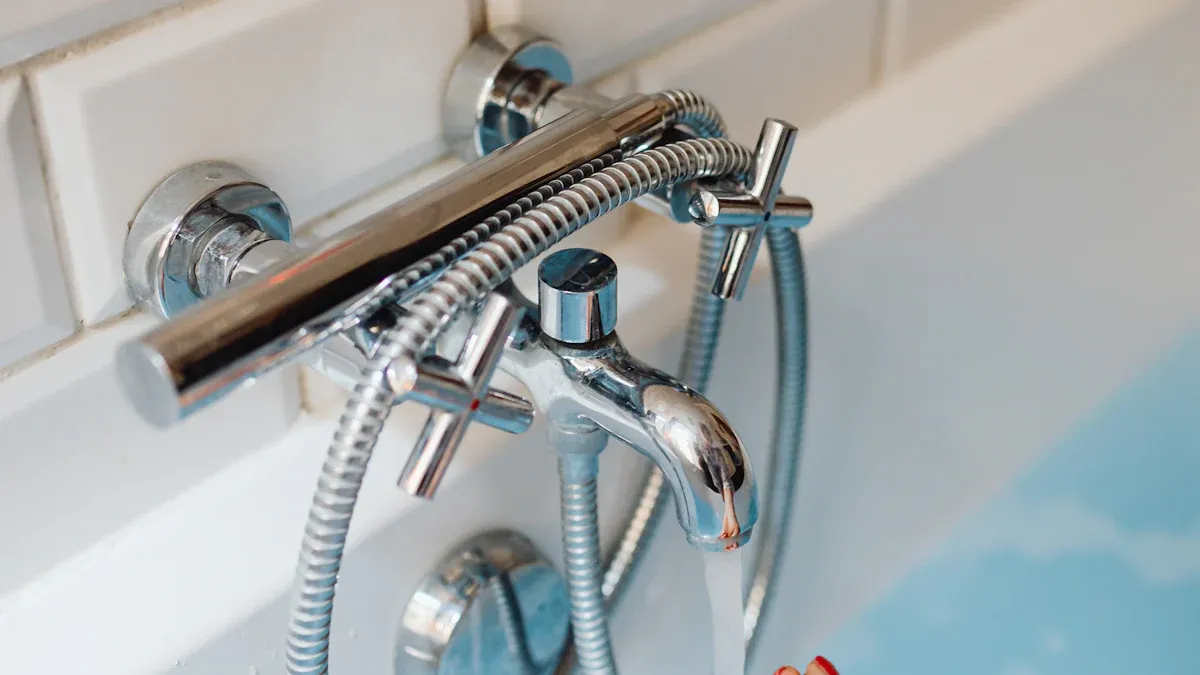
The best way to thoroughly clean the shower hose and head is simple: soak both in vinegar and then scrub with baking soda paste. Weak spray on the metal shower hose, white shell, turbid water or mildew spots all indicate mineral accumulation. It is estimated that 75% to 85% of American households have hard water, which promotes the growth of scale. This cleaning job is both cheap and safe, with household items and no special tools.
Key Takeaways
- Soak the shower head and hose in vinegar to break down mineral deposits. Then use baking soda paste to scrub and remove stubborn spots.
- Clean the shower head and water pipe every three months. This can prevent the recurrence of scale and mold.
- If cleaning no longer helps with water flow, please replace the shower head hose with a new one. If you see protrusions, knots that cannot disappear, or leaks, you also need to replace them.
Supplies to Deep Clean Shower Head and Hose
Vinegar, Baking Soda, and Basic Tools
This job only requires a brief list of supplies. Distilled white vinegar can accomplish most of the work. This mild acid typically contains about 5% acetic acid. A strength of 5% is very suitable for decomposing hard mineral deposits. It is effective against substances such as calcium carbonate in the scale that clogs the shower nozzle.
- Distilled white vinegar (acidity 5%)
- Baking soda
- Warm water
- Plastic bags or a bucket
- Soft cloth
- Soft-bristle toothbrush or scrub brush
- Adjustable wrench, if needed
This package technique works well for a connected shower head. Fill the plastic bag with vinegar and tie it to the fixture. Let the nozzle soak for about an hour. Acid can remove scale without any scrubbing.
Prep Your Shower Hose Attachments
The metal shower hose on handheld devices collects mold, white spots, and soap residue from hard water. Wipe the exterior with a damp cloth before soaking. Check for cracks or looseness in both connections. Tighten anything that feels loose with a wrench.
This preparation step can protect the coating and keep water inside the hose during the soaking process. Quick wiping can also display how much buildup is on the surface. Before each deep cleaning, cleaning the shower hose accessories in this way will keep the metal shiny for a longer period of time.
How to Clean Shower Hoses in 7 Steps
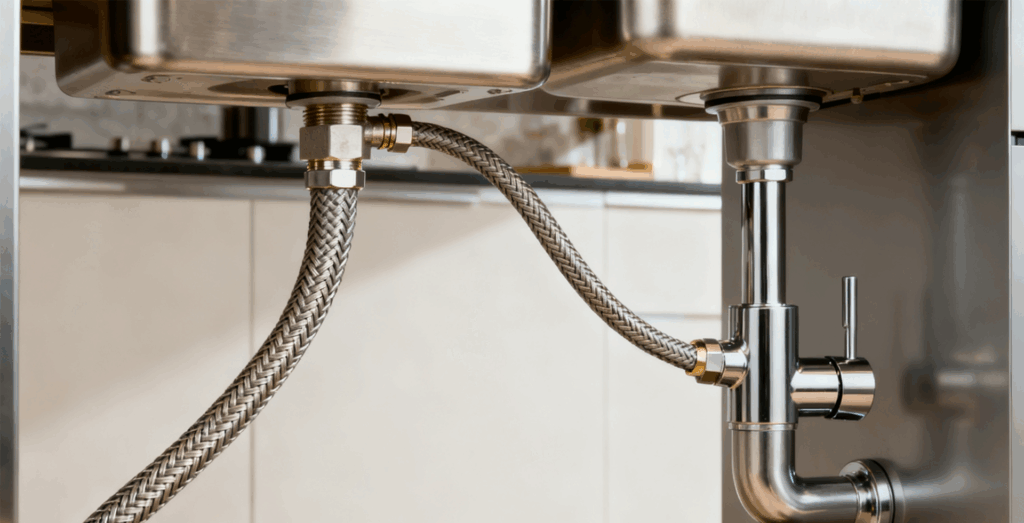
Remove, Soak, and Scrub
This section will demonstrate how to clean a shower hose through seven steps. The entire process takes approximately one hour of effective time, plus soaking time.
- Gather the supplies listed above.
- Detach the shower head and hose. Turn off the water first, then remove the hose attachment by hand or with the wrench.
- Soak both parts. Place the hose in a bucket filled with equal parts white vinegar and water. Set the shower head in a vinegar bowl or hang a vinegar bag over it. Soak for at least 30 minutes. Heavy limescale and grime buildup may need an overnight soak.
“Then, I just leave it there. For 30 minutes or, honestly, a few hours if I get sidetracked doing something else.”
- Rinse and scrub stubborn spots. Mix a baking soda paste at roughly 3 parts baking soda to 1 part water. Apply it to stubborn limescale deposits on the hose and head, then scrub gently with a soft cloth or toothbrush. The paste lifts most of the mineral deposits and cuts the need for a longer soak.
Some safety rules are important here. Do not mix vinegar with bleach or bleach based cleaning agents. The Centers for Disease Control and Prevention in the United States has warned that dangerous vapors may be released. Gently scrub to protect the surface of the coating. Use a soft brush on the nozzle to keep the opening intact.
Rinse, Dry, and Reattach
- Rinse thoroughly with warm water. Flush the inside of the hose so remaining dirt, grime, and limescale wash away.
- Dry both parts with a soft cloth. A dry hose resists mold and new white spots.
- Reattach the hose and shower head, then run the water to test the flow. Hand-tighten the connections only. Overtightening can crack fittings or strip threads.
Clean the hose with vinegar as planned, repeating every three months. Hard water can accelerate mineral deposition, so households with hard water may need it faster. Learning how to clean shower hose parts correctly once can make subsequent cleaning faster. A simple solution of vinegar and water can handle most tasks, while baking soda paste can cover the rest.
Keep Shower Hose Attachments Clean and Know When to Replace
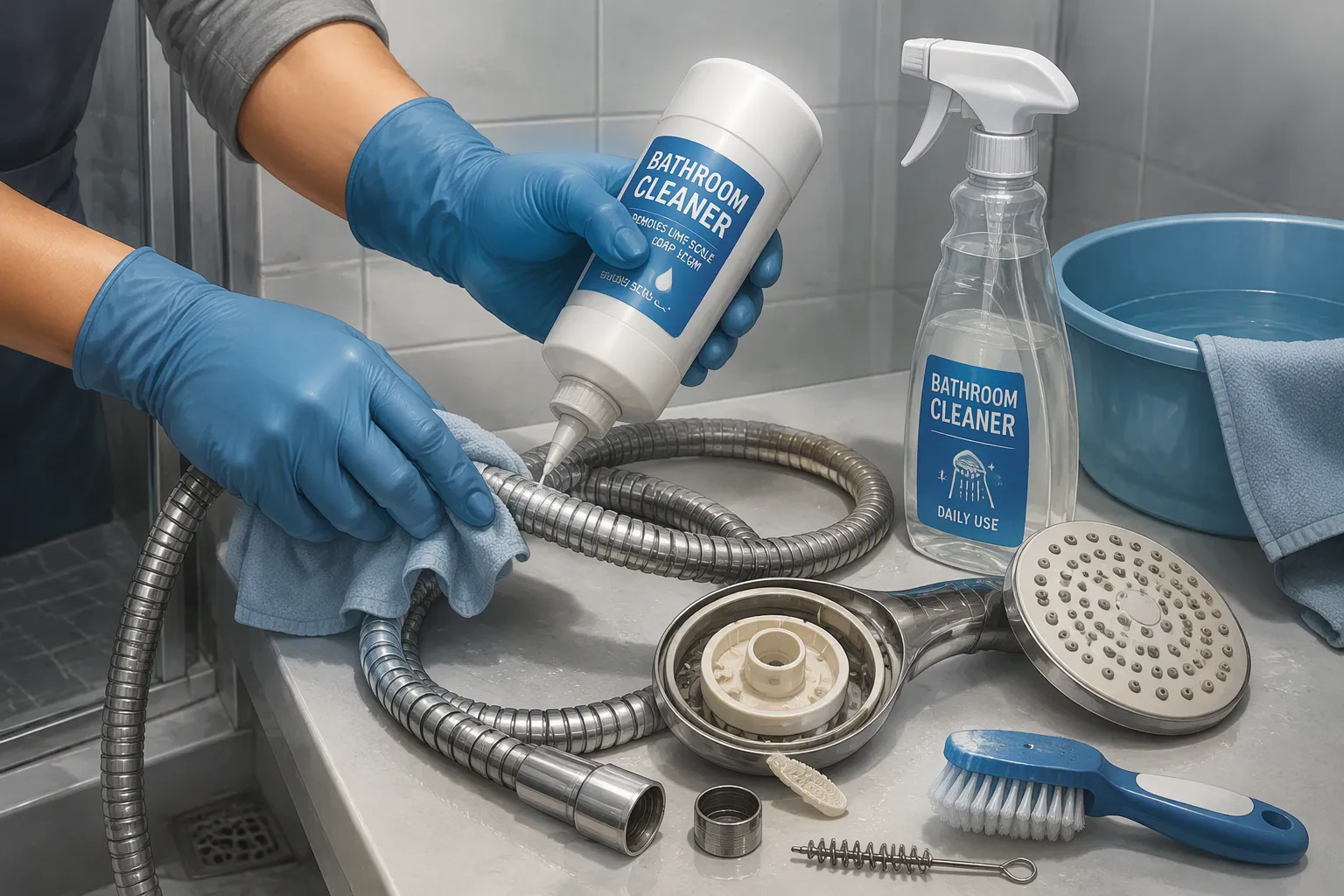
A Quarterly Cleaning Routine
A steady routine keeps mineral buildup from returning. Clean shower hoses and heads every three months. Homes with hard water may need more frequent work.
Aim to deep clean it at least once every few months, or more frequently if you live in an area with hard water.
Small habits stretch the time between deep cleans. Wipe the hose dry after each use. Run hot water briefly to flush the line. Check for new white spots or mold during weekly cleaning. These steps help clean your shower hose attachments without extra effort.
Signs It’s Time for a New Hose
Some problems outlast any cleaning method. Replace the hose when cleaning no longer restores flow. A bulge, a permanent kink, or a leak at the connections also signals the end.
| Sign | What It Means |
|---|---|
| Bulge or permanent kink | Structural damage; the weak spot may burst |
| Leak at connections | Worn gasket or thread; temporary fixes fail |
| Flow that stays weak | Internal blockage or liner damage |
Replacement hoses come in several builds. Stainless braided hoses resist corrosion in hot and cold water. Polymer or nylon options offer cost-effective flexibility. Inner cores include EPDM, PEX, or PTFE. Double-braided stainless steel supports high pressure. GONGGONG manufactures custom braided hoses as a wholesale supplier, with certified quality (WRAS, ACS, KTW/W270, WaterMark, ISO 9001, CE).
A vinegar soak plus a baking soda scrub handles most deep cleaning in under an hour. That simple routine removes limescale from the shower head and the shower hose.
A quarterly reminder keeps buildup from getting out of hand. Regular cleaning of shower hoses takes little effort.
If cleaning no longer restores flow, a new hose is a quick, low-cost fix.
FAQ
Does vinegar or baking soda work better on a shower hose?
Both work, and they do different jobs. Vinegar at 5% acidity dissolves limescale. A baking soda paste lifts the leftover film. Use vinegar first, then scrub the shower hose with the paste.
How often should someone clean shower hoses and heads?
A quarterly schedule suits most homes. Households with hard water may need to clean more often. Wipe the hose attachment dry after each shower to slow new buildup.
Can a kinked hose attachment be saved?
Sometimes. A mild kink often relaxes after a warm soak. A permanent kink or a bulge means the inner core has failed. At that point, no amount of cleaning restores the shower hose attachments, so replacement makes sense.