
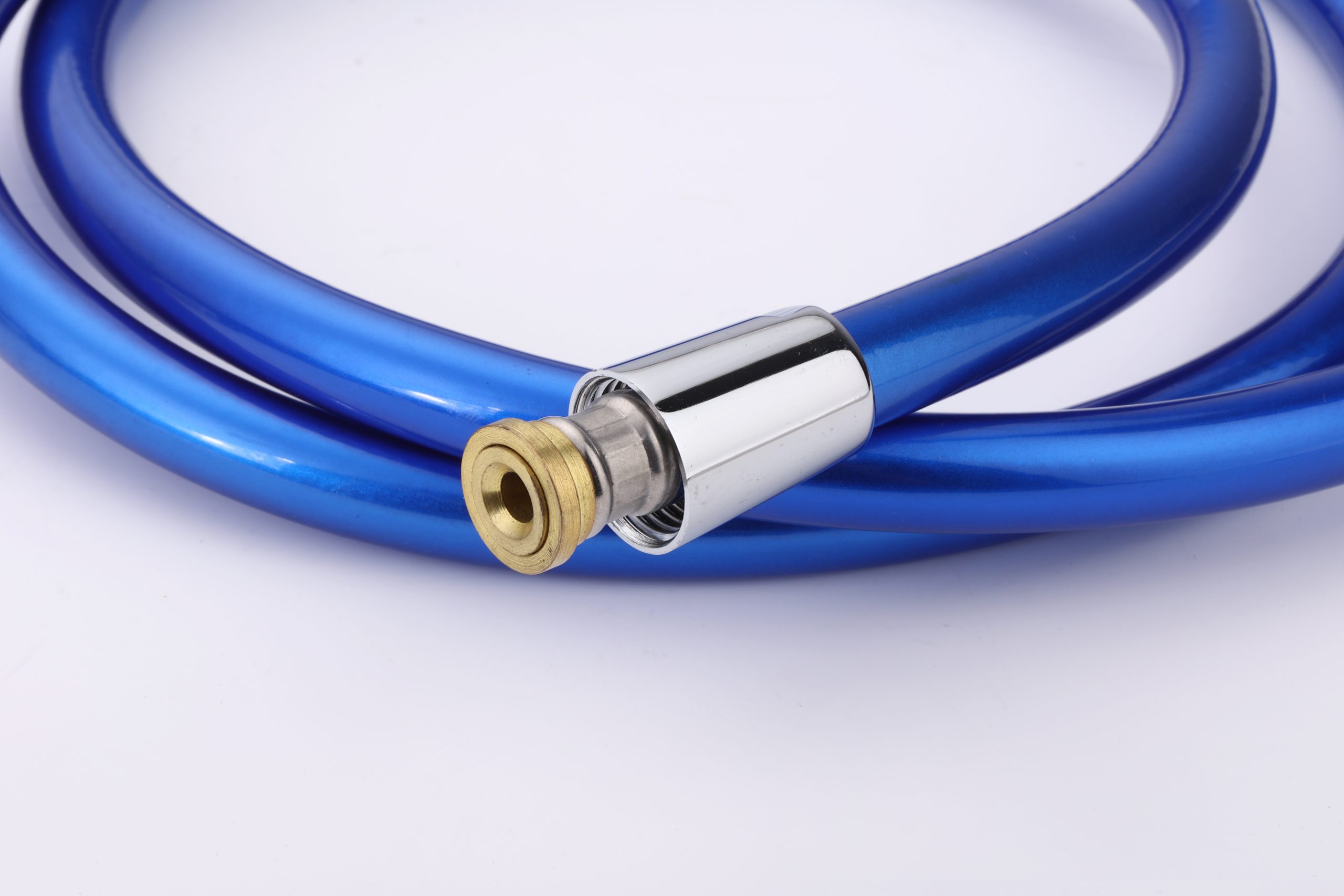
Every hose, from a standard flexible shower hose to heavy industrial lines, consists of three main components: an inner tube, a reinforcement layer, and an outer cover. Each layer serves a distinct function—fluid transport, pressure resistance, and environmental protection—and together they determine the hose’s pressure limits and applications.
Key Takeaways
- The inner tube transports fluids and must resist chemicals and high temperatures.
- The reinforcement layer holds internal pressure and defines the hose’s flexibility and bend radius.
- The outer cover protects against abrasion, moisture, and UV light.
- A hose only performs reliably when all three layers are mutually compatible.
The Three Main Components of a Flexible Hose
Inner Tube: The Fluid Pathway
The inner tube directly contacts the fluid and must resist swelling, cracking, and chemical damage. Heat resistance is also critical. Material choice dictates application:
- EPDM: Suitable for drinking and hot water.
- PEX: Smooth, chemically inert; ideal for residential water supply.
- PTFE: Endures harsh chemicals and extreme temperatures.
No single material suits all fluids.
Reinforcement: Strength and Flexibility
The reinforcement layer withstands internal pressure and determines how tightly the hose can bend.
| Reinforcement Type | Pressure Rating | Flexibility / Bend Radius |
|---|---|---|
| Spiral-Reinforced | Highest; resists pressure spikes | Reduced flexibility; not for tight bends |
| Braided | Moderate to high; double braiding increases rating | Superior flexibility; tighter bend radius |
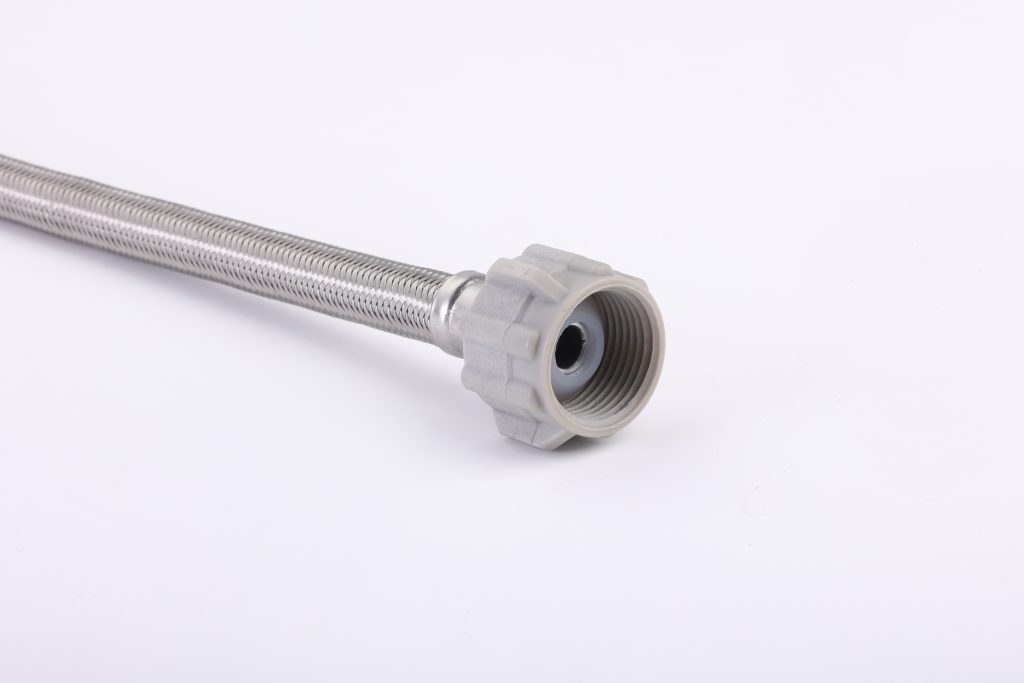
A common example is a stainless braided hose, which significantly enhances burst resistance and structural protection. Always select based on working pressure, not burst pressure.
Outer Cover: Environmental Protection
The outer sheath protects the reinforcement from abrasion, moisture, and UV exposure. Rubber outer layers resist scuffing on rough surfaces, while braided outer layers offer better drainage and heat resistance. This layer is the primary factor in extending service life in outdoor environments.
Manufacturers like GONGGONG integrate these layers using EPDM, PEX, or PTFE cores with dual-layer stainless steel braiding. Their products hold key certifications—including WRAS, ACS, KTW/W270, WaterMark, ISO 9001, and CE—which serve as a reliable quality reference for wholesale buyers.
How the Three Components Work Together

A hose is an integrated system, not a collection of independent parts. During thermal cycling, each layer expands and contracts at a different rate. If the inner tube expands beyond the reinforcement’s limit, the hose fails. Conversely, weak reinforcement cannot contain a high-quality inner tube. All connections and fittings must also match the hose’s pressure rating.
Matching Components to Your Application
Plumbing systems demonstrate this balance well. For instance, a kitchen hose often pairs a PEX core for potable water with an SS304 stainless steel braid for durability. These hoses are available in various lengths to fit different cabinetry. In HVAC and cooling circuits, the tube material must match the coolant, and the end fittings must match the hose’s pressure rating.
Key Selection Factors
Five factors dictate hose selection:
- Diameter: Too small restricts flow and risks kinking; too large makes the hose rigid.
- Pressure Rating: Must account for the entire assembly, including fittings.
- Temperature Range: Must suit the operating environment.
- Fluid Compatibility: The core must resist the medium.
- Connection Type: For rapid assembly or frequent maintenance, a quick connect hose simplifies installation.
Customizing the length and diameter prevents stretching and ensures stable flow.
Conclusion
A reliable flexible hose requires an inner tube for fluid transport, a reinforcement layer for strength, and an outer cover for protection. When selecting a hose, verify fluid compatibility, pressure ratings, operating environment, dimensions, and end connections. A well-matched assembly ensures long-term durability.
FAQ
What does each layer of a flexible hose do?
The inner tube carries the fluid. The reinforcement holds pressure and sets the bend radius. The outer cover blocks abrasion and UV light.
How do I choose the right pressure rating?
Match the rating to the whole assembly, including fittings. Check working pressure, not burst pressure. The weakest part sets the safe limit.
Do all three components need to match?
Yes. A strong braid cannot fix a swelling tube, and a good tube cannot survive weak reinforcement.