
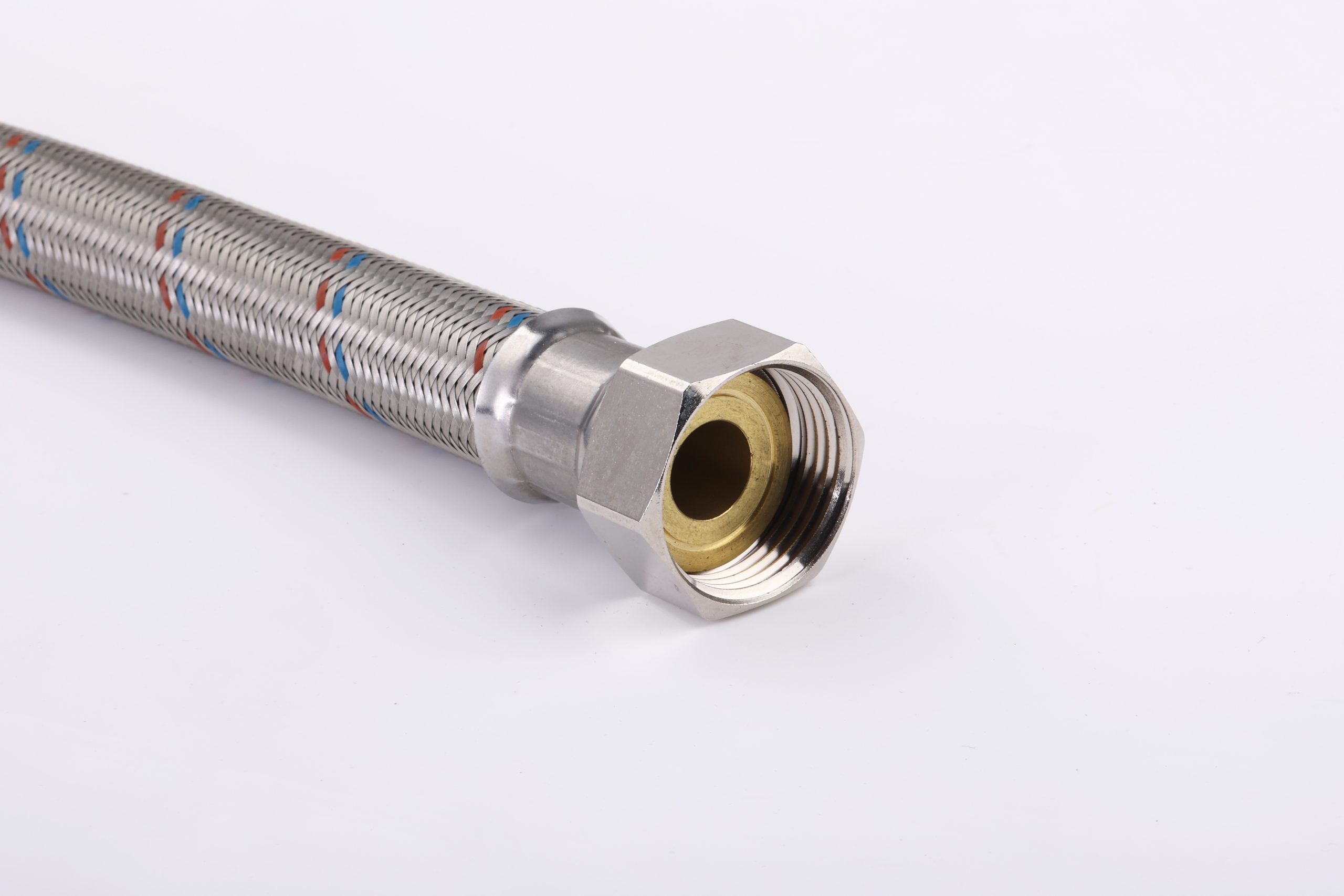
Flexible hoses primarily consist of three components: the inner tube, the reinforcement layer, and the outer covering. Each component serves a distinct function. The inner tube is designed for fluid conveyance, the reinforcement layer enhances pressure resistance, while the outer covering shields the entire assembly from environmental impacts. These components collaborate to enable flexible hoses to endure harsh working conditions.
Key Takeaways
- Understand the three hose layers: the inner tube, the reinforcement layer, and the outer layer. Each layer serves a specific function.
- Match the hose with the fluid, temperature, pressure, size, end, and delivery method. Use a stamped checklist. This practice can avoid incorrect selection.
- Flexible hoses are suitable for light-duty operations. Heavy-duty hoses can handle high-pressure operations. For custom orders, please consult a hose expert.
Choose the Right Flexible Hose: Know the Three Components
Flexible hoses have three layers, each with a distinct function. According to the SAE J517 standard, these three layers are referred to as the tube, reinforcement, and cover. Understanding each layer can assist buyers in selecting the appropriate flexible hose based on their needs.
Inner Tube: Fluid and Temperature Compatibility
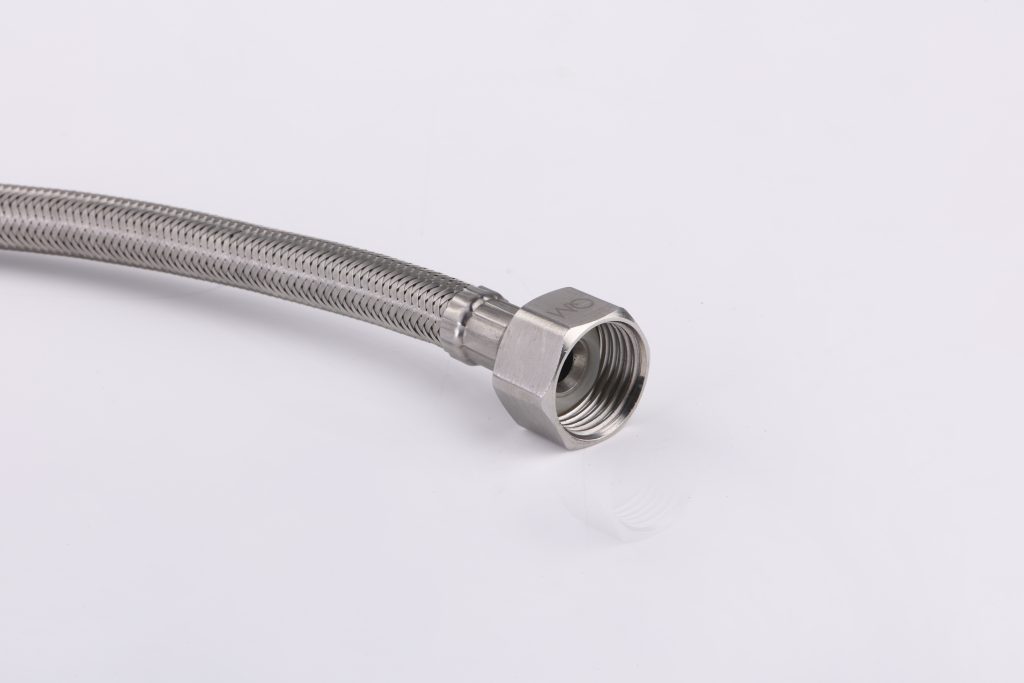
The inner tube is responsible for conveying fluids. It must be able to resist chemical erosion, withstand temperature changes, and ensure smooth fluid flow. The fluid and working conditions determine the material to be selected.
PTFE is resistant to almost all chemicals, including acids and solvents, and can withstand high temperatures up to 500°F. Nylon can withstand high temperatures up to 200°F and is suitable for a variety of industrial fluids. Fluororubber (FKM, also known as fluororubber) exhibits strong resistance to acids, solvents, and petroleum-based hydraulic oils. Nitrile rubber (NBR) performs well with petroleum-based oils, greases, and fuels, but not with polar solvents. Ethylene propylene diene monomer rubber (EPDM) is resistant to water, steam, and polar fluids, but not to petroleum products.
For food-grade applications, smooth white ethylene propylene diene monomer (EPDM) rubber or natural rubber that meets the standards of the US Food and Drug Administration (FDA) works well. Polyvinyl chloride (PVC) provides a low-cost way to transport food and beverages at room temperature. Polyurethane, on the other hand, possesses strength and kink resistance, making it suitable for general industrial use.
For many rubber compounds, the typical temperature range is from -40°F to 250°F. These figures are for reference only and are not precise limits. It is important to check their compatibility with the actual fluid and temperature.
Reinforcement and Outer Cover: Strength and Protection
The reinforcement layer controls the working pressure and flexibility. The braided layer is suitable for low-pressure work, with a pressure capacity of up to 300 psi. The single-wire steel braided layer can withstand pressures ranging from approximately 300 to 3000 psi. The double-wire steel braided layer can withstand pressures ranging from 1825 to 6000 psi, depending on the size of the hose. The spiral reinforcement layer can withstand very high pressures and challenging tasks.
For sanitary and plumbing applications, stainless braided hose and nylon braided hose are common choices for their strength, flexibility, and corrosion resistance.
The structure determines the bending radius. A 1/4-inch single-wire braided hose can be bent to 1.5 inches. A spiral-wound hose of the same size, however, requires 5 inches. The wire braiding layer provides greater flexibility. The spiral reinforcement layer provides greater strength, but feels harder.
The outer covering can withstand environmental conditions. Neoprene can resist wear, oil stains, and weathering. EPDM rubber can resist weathering and ultraviolet radiation. No material can simultaneously cope with the four factors of wear, oil stains, weathering, and ultraviolet radiation. Buyers must choose the appropriate covering based on their exposure risks.
These three layers work together. The inner tube ensures fluid compatibility. The reinforcement layer provides pressure strength. The outer layer provides durability against external threats.
Factors to Consider When Choosing a Flexible Hose
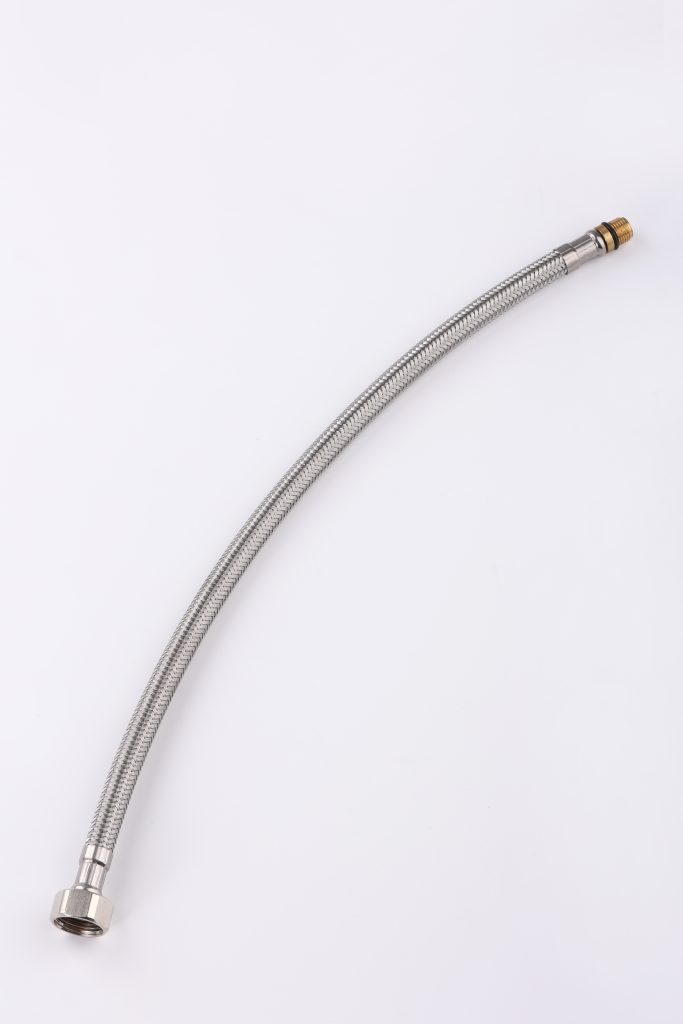
When you move from how a hose is built to how it is actually used, buyers need to think about several things related to the job. The STAMPED framework helps keep this review organized.
| Factor | Evaluation focus |
|---|---|
| Size | Needed flow rate, fluid speed, pressure loss, space for installation, smallest bend radius, and room to do maintenance |
| Temperature | Normal, highest short-term, lowest working, and surrounding temperatures, plus heat expansion and repeated changes |
| Application | Still or moving use, vibration, repeated bending, outside rubbing, cleanroom needs, and access for maintenance |
| Material | Chemical resistance, permeation behavior, extractables and leachables, surface cleanliness, and long-term aging against the actual process media |
| Pressure | Steady working pressure, start-up pressure, surge pressure, how often pressure pulses, and safety margin |
| Ends | Thread standard, connection shape, rust resistance, seal material compatibility, and how easy it is to maintain |
| Delivery | Engineering and legal rules that go beyond the hose itself |
Size, Working Pressure, and End Connections
The required inner diameter and length will affect the performance and efficiency of the system. Pressure drop increases with the length of the hose and decreases with the increase in inner diameter. A 50-foot hose with a 1-inch inner diameter has a flow rate of approximately 15 gallons per minute (GPM). When the same hose is extended to 150 feet, the flow rate drops to about 8 GPM. Changing the inner diameter to 2 inches at 150 feet, the flow rate can be restored to about 13 GPM. Below 50 feet, the loss in flow rate is relatively small. After exceeding 100 feet, the difference in flow rate between narrow and wide tubes becomes significant.
The demand for working pressure necessitates attention to stable operating pressure, surge pressure, and safety margin. Purchasers should select hoses with a working pressure rating higher than the maximum pressure of the system.
The end connection must match the equipment port. Common types include JIC 37° flare, O-ring face seal (ORFS), O-ring boss (ORB), NPT pipe thread, DIN metric 24° bite type, and four-bolt flange connection. Each type offers different sealing methods and pressure limits.
The same rule applies when selecting garden hoses. A 5/8-inch garden hose can withstand normal watering tasks under high household water pressure. For gardening tasks that require easy operation and simple storage, lighter hoses work well. Those who need hoses that are durable on rough surfaces may opt for heavier hoses.
Flexible vs. Heavy Duty Hoses for Your Application
Whether you choose a flexible hose or a heavy-duty hose depends on how you intend to use it. Standard flexible hoses are suitable for workshops, DIY projects, and light industrial tasks. They are easy to move and sturdy enough for daily use.
Heavy-duty hoses are capable of withstanding harsh environments. Steel wire reinforcement ensures stable flow and makes the hoses less prone to kinking. These hoses excel in roof construction, frame building, construction sites, and high-demand pneumatic systems. The SAE 100R12 and DIN EN 856 standards specify four-wire and six-wire spiral hoses for ultra-high pressure applications such as mining.
Temperature ratings also differentiate these categories. Hoses must maintain their strength at the temperatures they are intended to be used in to prevent safety hazards such as leaks or bursts.
For custom sizes, OEM materials, or wholesale orders, flexible hose manufacturers or suppliers can verify the specifications. Companies like Sanyeflex work closely with technical teams. They offer customized 3D shapes, pressure-reducing connectors, and built-in heat shields. Buyers should confirm all specifications with hose experts before placing an order.
Flexible hoses are composed of three layers. The inner tube is responsible for handling fluid compatibility, the reinforcement layer provides pressure strength, and the outer layer provides protection. When selecting flexible hoses, one should check the inner diameter, length, working pressure, temperature, chemical exposure, and end connections based on the intended application. Flexible hoses are suitable for standard tasks, while heavy-duty hoses can handle harsher conditions. Experienced flexible hose manufacturers or suppliers can confirm custom, wholesale, or OEM options.
FAQ
How does a buyer check a flexible hose before installation?
They inspect the inner tube for cracks, ensure that the reinforcement layer does not have exposed steel wires, and check the outer covering for cuts. The SAE J517 standard defines these three layers.
When should a user replace a flexible hose?
Replace the lid if it shows severe wear, protruding reinforcement, or leaking accessories. Under continuous ultraviolet exposure, hoses with a rated temperature of -40°F to 250°F may fail more quickly.
Can a standard flexible hose handle garden and landscaping work?
Yes. A 5/8-inch garden hose is sufficient for normal watering under household pressure. For rocky ground or daily gardening use, a thicker wall can better resist wear and tear. Garden tasks rarely require spiral reinforcement of 6000 pounds per square inch.