
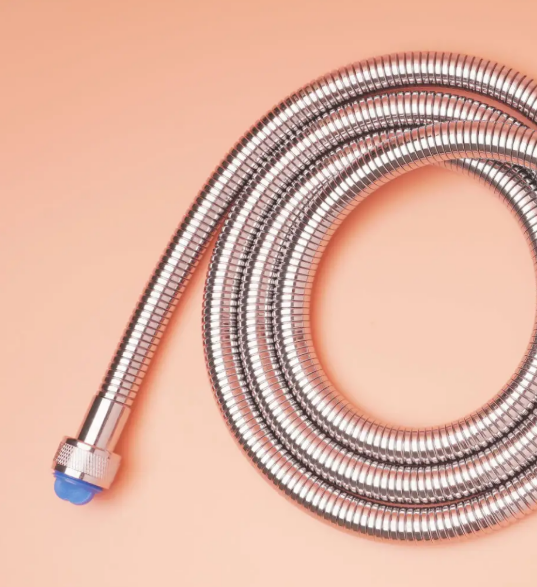
A flexible metal hose moves liquids and gases to places where rigid pipes cannot reach.These hoses bend around corners, fit into tight spaces, and link parts that move or shake. In engine systems, flexible metal hoses work as fuel lines and cooling loops. In HVAC systems, they soak up vibration from pumps and compressors. This use keeps fluids flowing safely.
Key Takeaways
- Flexible metal hoses can bend around corners and be installed in tight spaces where rigid piping cannot fit.
- These hoses are used in engines, HVAC systems, industrial facilities, and various types of buildings to safely transport liquids and gases.
- When selecting a hose, carefully consider factors such as pressure, temperature, and spatial constraints to ensure reliable operation.
How a flexible metal hose works

A flexible metal hose is a corrugated stainless steel tube used for conveying gases or liquids under pressure. Its corrugated core determines the component’s corrosion resistance, pressure rating, and flexibility. Flexible metal hoses are primarily categorized into two basic types: strip-wound and corrugated. Among these, the corrugated type is the preferred choice for pressurized applications, as its continuous metal wall ensures an effective seal and prevents leakage.
Corrugated metal hose construction
The bellows core is manufactured using a “hydroforming” process, which employs high-pressure water to press corrugations into a stainless steel tube. This method minimizes residual stress and ensures a uniform wall thickness. A consistent wall thickness allows for a more balanced distribution of stress during bending, thereby preventing the formation of weak points along the tube.
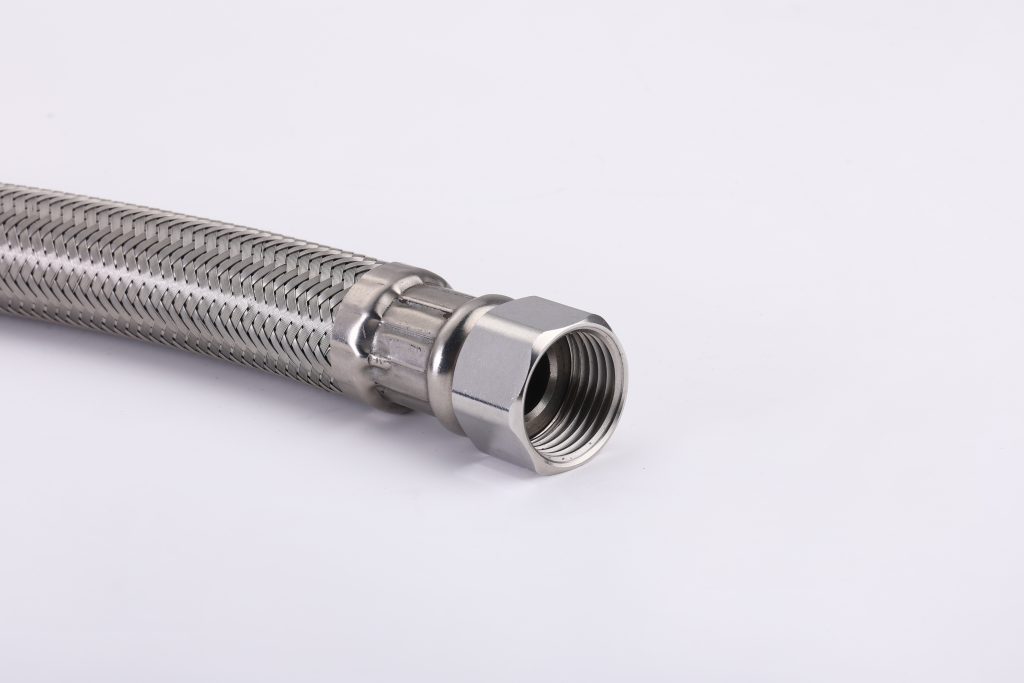
The complete assembly consists of three components: the bellows core, which serves as the sealed, pressure-bearing element; an external braided layer, designed to withstand the axial forces generated by internal pressure; and the end fittings, which facilitate connection to external equipment. Unbraided metal bellows are suitable for the transport of gases at low to medium pressures—typically up to 5 bar for domestic piping, and approximately 30 bar for industrial applications. When equipped with a stainless steel braided layer, the pressure rating can be significantly increased—reaching as high as 100–250 bar, depending on the tube diameter and the number of braided layers.
Flexibility, durability, and impermeability
The corrugated structure imparts flexibility to the hose. During bending, the corrugations on the outer radius move apart, while those on the inner radius are compressed. Greater corrugation height and tighter spacing enhance flexibility, though this comes at the expense of pressure resistance. Similarly, thinner tube walls facilitate easier bending but result in a lower pressure-bearing capacity.
The all-metal construction of the tube wall also provides an effective barrier against permeation. Metal hoses are well-suited for conveying small-molecule media, such as helium—an area where rubber hoses typically perform less effectively. This distinction relates to suitability for specific applications rather than a difference in overall quality. For high-pressure operations, engineers generally apply a 4:1 safety factor, meaning the operating pressure should be no more than 25% of the rated burst pressure. Test pressure is typically set at 150% of the rated operating pressure; in applications involving pressure pulsations, the rated pressure must be derated by 50%. Since pressure resistance decreases as temperature rises, correction factors must be applied. Furthermore, when selecting materials for the core tube and the braided layer, it is essential to carefully consider both the corrosivity of the conveyed medium and the external environmental conditions.
| Attribute | Corrugated | Stripwound |
|---|---|---|
| Pressure resistance | High | Lower |
| Leak tightness | Superior | Not 100% tight |
| Flexibility | Excellent | Unparalleled |
| Best use | High pressure, harsh conditions | Tight routing, budget-sensitive |
These traits make flexible metal hoses a strong fit for fluid transmission in flexible pipeline designs. The application range spans engines, HVAC, and sanitary lines.
Common application areas for metal hose
Industrial and energy applications
In industrial facilities, flexible metal hoses are used wherever rigid piping cannot meet process requirements. Common applications include the transport of high-temperature fluids, fuels, and chemicals; the conveyance of cryogenic fluids or compressed gases; vibration dampening; and use in industrial cleaning or testing systems. The table below categorizes the primary industrial applications.
| Application Area | How the Hose Serves |
|---|---|
| Process piping | Moves fluids, gases, and abrasive materials in plants, refineries, and power stations |
| Gas turbines and power plants | Carries fuel, oil, and coolant through tight spaces and absorbs vibration |
| Chemical sector | Alloy cores resist corrosion during chlorine transfer |
| Offshore drilling and refineries | Handles corrosive fluids in harsh marine conditions |
| Pneumatic conveying | Resists abrasion in low-pressure, vacuum, and dense-phase transfer |
The oil and gas industry relies on these components to transport oil, natural gas, and other high-pressure fluids. Metal hoses also serve to dampen vibrations; their corrugated inner tubes dissipate energy generated by pumping through minute deformations, while the outer braided mesh acts to limit displacement. In this context, “effective length” is critical: if a connector is too short, it becomes rigid, causing vibrations to be transmitted directly through it. This requirement becomes even more stringent under low-temperature operating conditions.
Corrugated metal hose assemblies can be made to handle temperatures as low as −325 °F. Ship-to-shore LNG transfer is one area where customers have had more success with metal hose than with other composite hose materials.
Building, plumbing, and sanitary applications
In various types of buildings, flexible metal hoses are widely used for connections in HVAC systems, water supply piping, and plumbing fixtures such as faucets, shower equipment, and bidets. When piping requires clearing or cleaning—for instance, through the use of drain snakes or cleaning rods—an internal liner may be necessary. Furthermore, liners are required when fluid flow velocities reach 25 feet per second (approximately 7.6 m/s) or when gas flow velocities exceed 75 feet per second (approximately 22.9 m/s). Such hoses are also employed in fire protection systems and gas piping; specifically, fire-resistant, strip-wound liners are well-suited for chimney venting systems.
Plumbing connectors must be manufactured from sanitary-grade materials and comply with relevant certification standards. GONGGONG provides wholesalers with custom braided hoses, featuring a stainless steel outer braid and an inner core made of EPDM, PEX, or PTFE. These hoses can be cut to specific lengths to accommodate tight installation spaces. The products hold various certifications, including WRAS, ACS, KTW/W270, WaterMark, ISO 9001, and CE. Several internationally renowned brands, including TOTO, specify the use of these hoses for their faucets, high-end shower systems, and bidets. This design is also suitable for kitchen water supply lines and fluid control systems—applications where connections must remain completely sealed and leak-free, even under fluctuating pressure and temperature conditions. These hoses are extensively used across the industrial, energy, HVAC, water supply and drainage, and plumbing sectors.
Flexible metal hoses are capable of conveying fluids and gases within confined spaces, areas prone to displacement, or environments characterized by demanding conditions. These products serve a wide range of industries, including industrial sectors, energy, HVAC, water supply and drainage, and various piping systems. For any specific application, it is essential to carefully select and match the appropriate inner core, braiding, and connection fittings. Our expert team will evaluate factors such as pressure, temperature, and spatial constraints to help you choose the ideal hose, ensuring reliable performance in actual operation.
FAQ
What media can a flexible metal hose carry?
The metal inner core can be used to transport gases, steam, fuels, chemicals, and cryogenic fluids. This all-metal tube wall also performs exceptionally well with media consisting of tiny particles, such as helium. Users can select an appropriate alloy material for the inner core based on the type of fluid being transported.
How does a buyer choose the right hose?
Please verify three key factors: operating pressure, operating temperature, and available space. Apply a 4:1 safety factor and incorporate temperature corrections. Additionally, ensure that the hose fittings and braid layer meet the requirements of the specific application.
Where do flexible metal hoses fit in buildings?
These are used to connect HVAC equipment and water supply lines to fixtures such as faucets, shower units, or bidets. This design is particularly well-suited for installations in confined spaces—such as inside cabinets—or for equipment prone to vibration. Certifications such as WRAS and WaterMark can serve as useful references when making final product selections.