
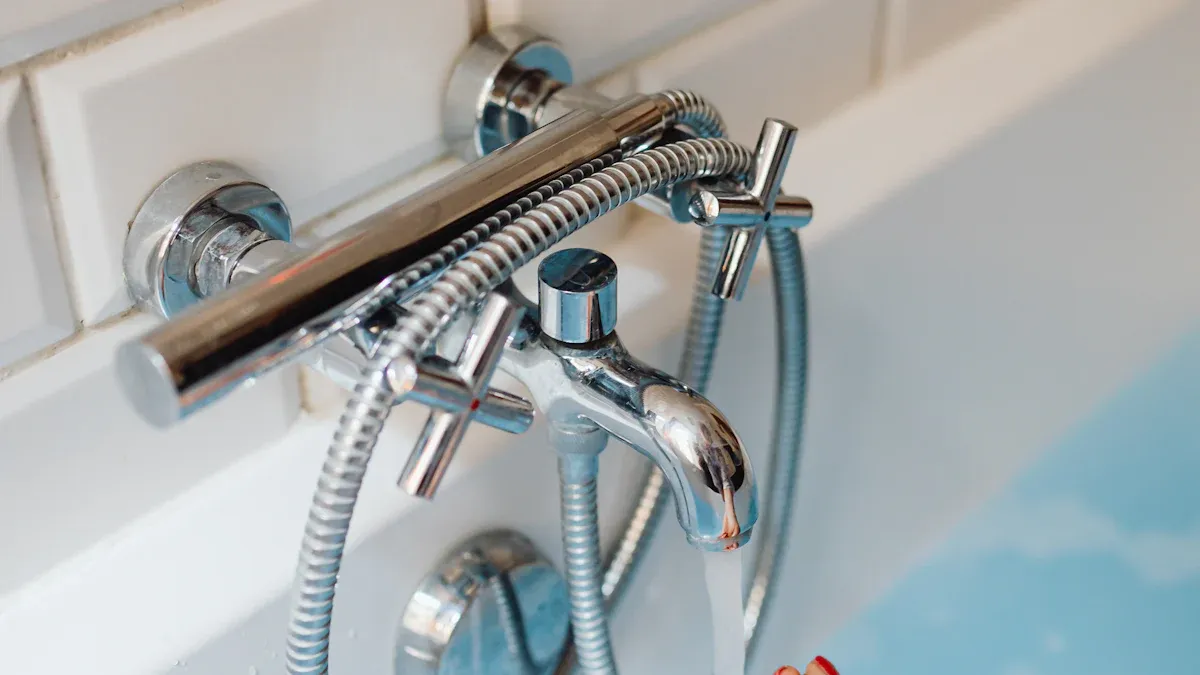
The rules governing the use of hoses stipulate that they must meet specific standards. These standards cover aspects such as installation methods, length, and safety. Following these rules effectively prevents leaks and damage. Today, hoses are crucial for the efficient operation of piping systems. Companies like GONGGONG offer a variety of specialized braided hoses. These standards are widely used in bathroom fixtures, construction, and factories.
Key Takeaways
- The installation of hoses must strictly adhere to relevant regulations. This helps prevent leaks and damage. Following these regulations ensures the safety and proper functioning of piping systems.
- Choose the appropriate hose based on your needs. PEX and PVC hoses are two options. They each have their advantages. Some are easy to install, while others can withstand high pressure.
- Regular inspection and maintenance of hoses are essential. It is recommended to inspect them every 5 to 10 years. This helps keep the hoses in good condition and avoids costly repairs.
Flexible Pipes: Types & Features

What Are Flexible Pipes?
Hose plays a vital role in piping systems. These hoses can bend and adapt to various shapes. Installers often use them in confined or hard-to-reach places. The 2% deflection rule helps understand how hoses perform under soil pressure. This rule means that the hose can bend slightly but still maintain its strength. The American Society for Testing and Materials (ASTM) specifies that the deflection of a hose should not exceed 7.5%. The American Water Association (AWWA) sets the limit at 5%.
Flex Pipe Materials & Construction
Hose are made from different materials. The material affects the hose’s performance and lifespan. Some common hose types include PEX hoses, PVC hoses, corrugated stainless steel hoses, and copper hoses.
| Type of Pipe | Features |
|---|---|
| PEX Pipes | These pipes bend easily, are simple to put in, last long, and work for hot or cold water. |
| Flexible PVC Pipes | These pipes are strong, handle high water pressure, work for cold water, and are easy to cut and join. |
| Corrugated Stainless Steel Tubing | These pipes are light, made for gas lines, bend well, and fit in small spaces. |
| Flexible Copper Pipes | These pipes are a classic choice, fit in tight spots, but do not bend as much as PEX or PVC. |
PVC hoses are transparent and weather-resistant. HDPE hoses are rust-free and have a lifespan of over 50 years. Polymer or nylon hoses are easy to install. EPDM and PEX hoses are suitable for both hot and cold water. PTFE liners enhance the hose’s chemical resistance.
GONGGONG Braided Hose Overview
GONGGONG manufactures robust and durable braided hoses for large orders or special needs. The company uses stainless steel braiding layers to extend the hose’s lifespan. This design allows the hose to withstand high pressure and prevent bursting. GONGGONG hoses meet WRAS, ACS, KTW/W270, WaterMark, ISO 9001, and CE standards. The hoses are resistant to wear, twisting, or breakage. GONGGONG offers hoses in various sizes and lengths suitable for bathrooms, construction sites, and factories. GONGGONG rigorously inspects all materials to ensure the hoses are safe, reliable, and consistently perform well.
Rule for Flexible Pipes: Guidelines & Safety

Where to Use Flexible Pipes
Hose plays a vital role in piping systems. Installers use hoses for surface irrigation and drainage. These pipes are flexible and can be installed in confined spaces. Hose drain pipes are widely used in kitchens and bathrooms, and also in HVAC systems. Regulations require that hose length and installation location conform to standards. Most guidelines recommend that hose lengths in water supply lines should not exceed 1.5 meters. Hose is also used in non-potable water systems and low-pressure projects in commercial locations. The design and use of hoses must comply with hose design specifications. Hose is not suitable for permanent underground drainage systems. Buried hoses may collapse under soil pressure. Installers must follow Veritec’s guidelines to ensure safe and proper installation.
Where Not to Use Flex Pipe
Hose is not suitable for all plumbing projects. Regulations warn against its use in certain situations. Installers should not use hoses for outdoor gas appliances. They should avoid using hoses to connect high-temperature systems and permanent underground drain pipes. Hose is susceptible to damage from UV radiation and severe weather. Inspectors will check that hoses meet outdoor use standards and that damage prevention measures have been implemented. Guidelines state that hoses are not suitable for projects requiring durability and the ability to withstand frequent maintenance. Safety standards require high-pressure hoses and critical systems to use rigid conduits.
- Flexible pipes should not be used in:
- Outdoor gas installations exposed to damage or sunlight
- Permanent jobs needing strength against weather and repairs
- Places where pipes can be hit, scraped, or left unsupported
- Every plumbing need in a home, especially for high-pressure or outside systems
Installation & Replacement Tips
Installers must strictly adhere to hose installation specifications. These specifications require the use of isolation valves with pressure equal to or higher than the system pressure. The selection of the appropriate valve depends on the pipe size, connection method, and operating principle. Special applications such as fire fighting or extreme high-temperature applications require the use of certified valves. The table below lists the isolation valves required for the hoses:
| Criteria | Details |
|---|---|
| Pressure level and sealing | Valves must match or beat system pressure; sealing changes by risk |
| Pipe size and connection method | Valve types depend on diameter; connections change for each job |
| Operation mode | Manual, electric, and pneumatic modes have special benefits |
| Special working conditions | Fire protection, temperature extremes, and sanitary certifications |
Installers must avoid errors such as improper calibration, liner wrinkling, poor sealing, and curing problems. Regular inspections help prevent leaks and malfunctions. Depending on usage and condition, hoses should be replaced every 5 to 10 years. Safety regulations require inspection of joints and bends, leak testing, and documentation of maintenance. Installers should support the hoses near joints and transitions. They must maintain the correct slope of the drainage system and check for missing supports or weak points. Hoses must meet local standards and follow Veritec guidelines.
Tip: Always ask a professional plumber to look at your project and suggest the best materials. Plan regular maintenance and checks to keep things safe and reliable.
Common Issues & How to Avoid Them
Hose problems can occur during use. Regulations recommend following operating guidelines to avoid these issues. Common mistakes include wrinkles, folds, poor sealing, and improper maintenance. These problems can lead to leaks, reduced water flow, and pipe failure. Installers must thoroughly clean the pipe surface and carefully handle the lining. Regularly cleaning the drain pipe prevents blockages and keeps water flowing smoothly. Winter antifreeze treatment of the hose prevents it from freezing and cracking in cold weather, reduces mineral buildup, and extends the hose’s lifespan.
| Installation Mistake | Consequences |
|---|---|
| Improper calibration | Wrinkles, trapped air, flat spots, gaps at connection points |
| Wrinkles and folds in liner | Solids snagging, less flow, choke points in bends and junctions |
| Poor end seals and terminations | Gaps let roots or groundwater in, weak ends can move |
| Curing issues | Soft liners, cracking, less strength or chemical resistance |
| Installation errors | Bad adhesion, voids, leaks from poor surface preparation |
Installers must adhere to standards such as the IAPMO Unified Piping Code and International Piping Standards. These standards specify minimum spacing, load requirements, and support methods for hoses. Following these standards ensures proper installation and reduces hose stress. Failure to comply can lead to safety hazards, failed inspections, and even legal disputes. High-quality hoses like GONGGONG braided hoses offer enhanced safety, longer-lasting reliability, greater durability, and flexibility in confined spaces. Designed and used according to global standards, these hoses provide peace of mind.
Note: Always adhere to hose design specifications, including design pressure, to ensure safe and proper installation.
Flexible pipes have to follow strict rules to stay safe and work well. Good choices like GONGGONG Braided Hose use tough materials. They have DVGW certification, resist heat, and come with a 10-year warranty. Installers should use standards like SAE J1942. They should also ask experts for advice on each job.
| Standard/Guideline | Description |
|---|---|
| SAE J1942 | Nonmetallic flexible hose must meet this standard for installation in many systems. |
| ISO 15540 | Gives fire-test steps as another option to SAE J1942. |
| IMO Resolution A.753(18) | Rules for putting in plastic pipes. |
| IMO Resolution MSC.313(88) | Extra rules for plastic pipe installations. |
FAQ
What makes flexible pipes different from rigid pipes?
Flexible pipes can bend without breaking. Rigid pipes do not bend at all. Flexible pipes fit into small or curved spaces. They make installation faster and easier. Using flexible pipes means less work for installers. Flexible pipes also shake less when water moves through them.
How does the design of flexible pipes improve safety?
Flexible pipes are made from tough materials. Their design helps stop leaks. These pipes can handle strong water pressure. Flexible pipes do not rust easily. They follow important safety rules. Flexible pipes help keep water clean and safe.
Where should flexible pipes be used in plumbing systems?
Flexible pipes are good for kitchens. They also work well in bathrooms. Flexible pipes are used in HVAC systems. They help with watering plants outside. Flexible pipes are great for fixing old plumbing. They can change shape to fit new designs.
Tip: Flexible pipes make it easy to fix or change plumbing when needed.